

Getting around Mozambique
In Mozambique, scheduled flights connect Maputo with major cities including Beira, Nampula, Pemba, Quelimane, Tete, Chimoio and Vilankulo, helping reduce journey times across the country's long coastline.
Domestic flights are particularly useful for visitors travelling to destinations such as the Bazaruto Archipelago, Quirimbas Archipelago and northern Mozambique, where road journeys can be lengthy.
LAM Mozambique Airlines is the principal domestic carrier, while other airlines may operate selected internal routes. Flight schedules can be subject to seasonal changes, and services to smaller airports may operate less frequently.
Road transport is the principal means of getting around Mozambique, with a network of national roads linking the major cities, towns and ports. The EN1, the country's main highway, runs north–south along much of the coast, connecting Maputo with Beira, Quelimane, Nampula and Pemba, while other national roads provide access to inland provinces and neighbouring countries.
Journey times can be long due to the country's size, variable road conditions and seasonal weather. Travelling between northern and southern Mozambique often requires a full day's drive or longer, making domestic flights a practical alternative for longer distances.
Private vehicles, taxis, minibuses and long-distance coaches are widely used throughout the country. Fuel is widely available in cities, towns and along the principal highways, although filling stations become less frequent in remote areas. Travellers undertaking longer journeys should plan refuelling stops carefully, particularly in northern Mozambique.
Road quality in Mozambique varies considerably. Major highways linking Maputo, Beira, Nampula and other principal cities are generally paved, although potholes, damaged surfaces and roadworks are common on some sections.
Secondary and rural roads are often unpaved and can become difficult to use during the rainy season, when flooding, washouts and damaged bridges may disrupt travel. Four-wheel-drive vehicles are recommended for some remote areas, particularly when travelling to national parks and less-developed coastal regions.
Road lighting is limited outside urban areas, and road markings may be poor or absent in some locations. Travellers should exercise particular caution when driving at night due to uneven road surfaces, pedestrians, cyclists and livestock.
Mozambique's principal roads are designated as EN (Estrada Nacional or National Road), such as the EN1, which forms the country's main north–south highway. Secondary and regional roads use other route designations and connect provincial capitals, smaller towns and rural areas.
Car hire is available in Maputo, Beira, Nampula, Pemba, Vilankulo and at the country's principal airports. Both international and local rental companies operate in the larger cities, offering a range of vehicles, including four-wheel-drive models suitable for travel on unpaved roads.
Drivers are generally required to be at least 21 years old and hold a valid driving licence. An International Driving Permit is recommended alongside a national licence. Travellers should confirm insurance cover, cross-border permissions and roadside assistance arrangements before hiring a vehicle.
Taxis are available in Maputo, Beira, Nampula, Pemba and other larger towns. Most are privately operated and can be hired for short journeys, airport transfers or longer trips. Taxis are generally not metered, so fares should be agreed before the journey begins.
Shared taxis, known locally as chapas, are widely used by local residents for travel within towns and between nearby communities. They follow fixed routes, depart when full and provide an inexpensive but often crowded means of transport.
Ride-hailing services are available in Maputo, with platforms such as Yango, GrupGo, Ride Mozambique and Bolt operating in parts of the city. In other parts of the country, taxis are usually arranged directly with drivers or through hotels and accommodation providers.
Cycling is widely used by local residents for everyday transport, particularly in towns and rural communities. It is also becoming increasingly popular with visitors exploring quieter coastal areas, national parks and scenic rural landscapes.
Road conditions, heavy traffic in some urban areas and limited cycling infrastructure can make cycling challenging on major roads. Travellers should exercise caution, particularly when riding after dark, and carry sufficient water and basic repair equipment when cycling in remote areas.
Long-distance coaches and buses connect Mozambique's major cities and towns, including Maputo, Beira, Chimoio, Quelimane, Nampula, Nacala and Pemba. Services are operated by a number of private companies, with standards ranging from basic minibuses to modern air-conditioned coaches on the busiest routes. Journey times can be long, particularly on north–south routes, and schedules may be affected by road conditions and weather.
Advance booking is advisable on popular routes and during public holidays. Long-distance coaches generally depart from designated bus terminals, with the Junta bus terminal in Maputo serving many services to destinations across Mozambique and neighbouring countries.
Traffic in Mozambique drives on the left-hand side of the road. Speed limits are generally 60km/h (37mph) in built-up areas, 100km/h (62mph) on open roads and 120km/h (75mph) on motorways, unless otherwise indicated by signs.
Seat belts must be worn where fitted, and motorcycle riders and passengers must wear helmets. The use of hand-held mobile phones while driving is prohibited, and drink-driving laws are strictly enforced. Police checkpoints are common across the country, and drivers should comply with traffic officers' instructions.
Breakdown and roadside assistance services are most readily available in Maputo, Beira and other larger towns, while assistance may be slower or more limited in remote parts of the country.
Travellers using hired vehicles should contact the rental company first in the event of a breakdown, as many operators provide roadside assistance or vehicle recovery services. Drivers undertaking longer journeys should carry water, a charged mobile phone and basic emergency supplies, particularly when travelling through sparsely populated areas.
Foreign drivers may use a valid national driving licence in Mozambique for short visits. An International Driving Permit is recommended and may be required by some car hire companies.
Drivers must carry their driving licence, passport or another form of identification, vehicle registration documents and proof of insurance at all times while driving. Visitors entering Mozambique with their own vehicles should also carry the required temporary importation documents.
Rental vehicles should carry the hire agreement and any additional documentation required for cross-border travel into neighbouring countries.
Urban transport in Mozambique is centred on minibuses, buses and taxis. Shared minibuses, known locally as chapas, are the most widely used form of public transport in cities such as Maputo, Beira, Nampula and Pemba, operating on fixed routes and providing an inexpensive way to travel.
Private taxis are available in the larger cities and can be hired for short journeys or by the day. Taxis are generally not metered, so fares should be agreed before the journey begins. Ride-hailing services, including Yango and GrupGo, operate in parts of Maputo, while taxis elsewhere are usually arranged directly with drivers or through hotels.
Maputo also has a municipal bus network serving many parts of the city. Walking is practical in some central areas during daylight hours, although pavements can be uneven and traffic may be heavy around markets and commercial districts.
Passenger rail services in Mozambique operate mainly on separate regional networks centred on Maputo, Beira and Nacala. Routes include Maputo–Ressano Garcia, Beira–Moatize and Nampula–Cuamba. Frequencies and timetables vary, and travellers should confirm schedules in advance with the railway operator.
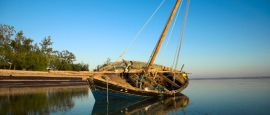
Domestic water transport plays an important role in parts of Mozambique, particularly along the coast, on the Zambezi River and between offshore islands. Ferries and passenger boats connect a number of communities where road links are limited or unavailable.
Regular ferry services operate between Maputo and Catembe, while passenger boats also connect the mainland with islands in the Bazaruto and Quirimbas archipelagos. Additional ferry crossings operate at several river estuaries and coastal locations where bridges are unavailable.
Services and schedules can be affected by weather and sea conditions. Travellers should use established operators and avoid overcrowded vessels, particularly during the rainy season.
Do you have any Feedback about this page?
© 2026 Columbus Travel Media Ltd. All rights reserved. No part of this site may be reproduced without our written permission, click here for information on Columbus Content Solutions.



 You know where