

Latvia Weather, climate and geography
Weather & climate
Latvia has a temperate climate with four distinct seasons. Summers are generally mild to warm with long daylight hours, while winters are cold, dark and often snowy. Coastal areas along the Baltic Sea tend to experience slightly milder winters and cooler summers than inland regions.
Spring (March to May)
Spring arrives gradually in Latvia, with temperatures warming noticeably from April onwards. Forests, parks and countryside areas become increasingly green, and longer daylight hours make this a pleasant time for sightseeing and outdoor activities. Temperatures typically range from 5 to 18°C (41 to 64°F).
Summer (June to August)
Summer is the most popular time to visit Latvia, with mild to warm temperatures, long evenings and a busy festival calendar. Daytime temperatures generally range from 20 to 27°C (68 to 81°F), though hotter periods occasionally occur. Coastal destinations such as Jūrmala become especially popular during this period, while national parks and countryside regions are well suited to hiking, cycling and outdoor activities.
Autumn (September to November)
Autumn brings cooler temperatures and colourful forests, particularly in Gauja National Park and other wooded regions. September can still be relatively mild, while October and November become increasingly colder, wetter and darker. Autumn is often considered one of the best seasons for nature photography and forest landscapes.
Winter (December to February)
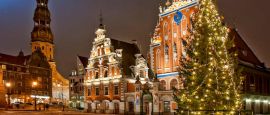
Winter is cold, with snow common across much of the country. Temperatures frequently fall below freezing, particularly inland, while daylight hours become very short. Riga's Christmas markets and snow-covered Old Town create an atmospheric winter setting, and winter sports are possible in some rural areas.
Warm clothing is essential for Latvia during much of the year, particularly from late autumn to early spring when temperatures can be cold and conditions wet or snowy. Winter visitors should bring a heavy coat, warm layers, gloves, scarves, hats and waterproof footwear, especially between December and February.
Light to medium-weight clothing is suitable during summer, though evenings can still be cool, particularly near the Baltic coast. A light waterproof jacket or umbrella is useful throughout the year due to changeable weather conditions.
Comfortable walking shoes are advisable for exploring Riga's cobbled streets, national parks and rural areas. Visitors planning outdoor activities in forests or countryside regions should also bring suitable clothing for cooler temperatures and insects during warmer months.
Geography
Latvia is located on the eastern coast of the Baltic Sea in Northern Europe and is one of the three Baltic states, alongside Estonia and Lithuania. It shares land borders with Estonia to the north, Lithuania to the south, Russia to the east and Belarus to the southeast. The Gulf of Riga lies along much of the country's western coastline.
The Latvian landscape is generally low-lying and heavily forested, with forests covering more than half of the country. Large areas of wetlands, rivers and lakes are spread across the interior, while sandy beaches and dunes line much of the Baltic coast. Latvia's highest point is Gaiziņkalns, which rises to 312m (1,024ft) above sea level.
The Daugava River is Latvia's most important river and flows through the country from southeast to northwest before reaching the Baltic Sea at Riga. Other important rivers include the Gauja, Lielupe and Venta. Gauja National Park, located northeast of Riga, is known for its forests, sandstone cliffs and river valleys.
The climate is temperate and influenced by the Baltic Sea, with relatively mild but often damp conditions along the coast and colder winters inland. Summers are generally mild to warm, while winters are cold, with snow common between December and March.
Wildlife includes elk, deer, wild boar, lynx and a variety of bird species, particularly in forest and wetland regions. Latvia's extensive natural landscapes and relatively low population density make nature tourism and outdoor activities an important part of the country's appeal.
Do you have any Feedback about this page?
© 2026 Columbus Travel Media Ltd. All rights reserved. No part of this site may be reproduced without our written permission, click here for information on Columbus Content Solutions.



 You know where