


Cape Kolka marks the point where the Gulf of Riga meets the Baltic Sea and is one of Latvia's most remote coastal landscapes. Windswept beaches, forests and fishing villages dominate the area, which forms part of the protected Slītere National Park.
Book and Go

Latest features
Latvia things to see and do
Cape Kolka
Cēsis
Cēsis is one of Latvia's oldest towns and is known for its medieval castle ruins, cobbled streets and historic atmosphere. The town has become increasingly popular for its cafés, cultural events and access to surrounding forests and countryside.
Daugavpils
Daugavpils, Latvia's second-largest city, lies near the borders with Lithuania and Belarus in the southeast of the country. The city is known for its multicultural character and the large Daugavpils Fortress, one of the few early 19th-century fortresses in Eastern Europe to survive largely intact.
Gauja National Park
Gauja National Park is Latvia's largest national park and one of the country's most popular outdoor destinations. Forests, sandstone cliffs, caves and river valleys dominate the landscape, while hiking, cycling and canoeing are popular activities during the warmer months.
Jūrmala
Jūrmala is Latvia's best-known seaside resort and lies around 25km (16 miles) west of Riga along the Baltic coast. The town is known for its long sandy beaches, pine forests and historic wooden villas, while spas and wellness tourism remain an important part of its identity.
Kuldīga
Kuldīga is a picturesque town in western Latvia known for its well-preserved historic centre and relaxed atmosphere. The town's main attraction is Ventas Rumba, often described as Europe's widest waterfall, which stretches across the Venta River.
Latvian Ethnographic Open-Air Museum
Located on the outskirts of Riga, the Latvian Ethnographic Open-Air Museum showcases traditional rural life from across Latvia. Historic wooden farmhouses, windmills, churches and workshops have been relocated from various regions of the country, offering insight into traditional Latvian architecture and village culture.
Liepāja
Liepāja is a Baltic coastal city known for its beaches, military history and music culture. The city combines a sandy coastline with former Soviet military sites, including Karosta Prison and naval fortifications, and hosts concerts and cultural festivals throughout the year.
Riga Old Town (Vecrīga)
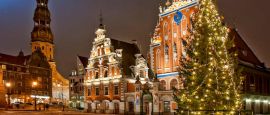
Riga Old Town (Vecrīga) is the historic heart of the Latvian capital and a UNESCO World Heritage Site known for its medieval streets, churches and merchant buildings. Highlights include Riga Cathedral, Saint Peter's Church and the House of the Blackheads, while cafés, squares and cobbled lanes give the area a lively atmosphere year-round.
Riga's Art Nouveau Architecture
Riga has one of the largest collections of Art Nouveau architecture in Europe, particularly around Alberta iela and Elizabetes iela. Elaborate façades, decorated with sculptures, mythical figures, and geometric details, reflect the city's prosperity during the late 19th and early 20th centuries.
Rundāle Palace
Rundāle Palace, located in southern Latvia near the border with Lithuania, is Latvia's grandest Baroque palace and is often compared with smaller versions of Versailles or Schönbrunn. Built in the 18th century for the Duke of Courland, the palace is known for its ornate interiors, formal gardens and impressive architecture.
Sigulda
Sigulda, located within Gauja National Park, is often referred to as the "Switzerland of Latvia" due to its wooded valleys and scenic setting. The town is known for castles, adventure sports and hiking trails, while nearby attractions include the medieval Turaida Castle and the Gutmanis Cave.
Do you have any Feedback about this page?
© 2026 Columbus Travel Media Ltd. All rights reserved. No part of this site may be reproduced without our written permission, click here for information on Columbus Content Solutions.



 You know where