
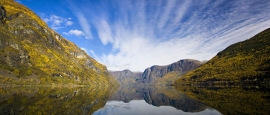


The Apuseni Mountains in western Romania are known for caves, forests, traditional villages and hiking opportunities. The region attracts visitors seeking outdoor activities and quieter countryside landscapes away from the more heavily visited Carpathian resorts.
Book and Go

Latest features
Romania things to see and do
Apuseni Mountains
Bran Castle
Often associated with the Dracula legend, Bran Castle is Romania's most famous castle and a firm favourite among visitors. Although the connection to Vlad the Impaler is largely literary and symbolic, the dramatic hilltop setting and medieval architecture make it a popular stop in Transylvania.
Brașov
Set against the Carpathian Mountains, Brașov is a historic Transylvanian city known for its colourful old town, Gothic Black Church, medieval fortifications and lively café scene. The surrounding mountains also make it a popular base for hiking, skiing and outdoor activities.
Bucharest
Romania's capital is a city of contrasts where elegant 19th-century architecture, communist-era boulevards and modern cafés coexist side by side. Highlights include the enormous Palace of the Parliament, the atmospheric Old Town, the Romanian Athenaeum and numerous parks and museums. Bucharest also has one of the liveliest nightlife scenes in Eastern Europe.
Carpathian Mountains
The Carpathian Mountains, which stretch across central Romania, are known for their forests, hiking trails and scenic mountain landscapes. In winter, resorts such as Poiana Brașov, Sinaia and Predeal attract skiers and snowboarders. During the warmer months, the mountains are also popular for cycling, mountain biking and outdoor adventure activities.
Cluj-Napoca
Cluj-Napoca is a dynamic and youthful city known for its universities, technology sector and lively cultural scene. Austro-Hungarian architecture, landmarks such as St. Michael's Church and Union Square, and a growing café and festival scene contribute to the city's increasingly cosmopolitan atmosphere.
Constanța
Constanța is Romania's principal Black Sea port and a historic coastal city with roots dating back to ancient Greek and Roman times. Beaches, seaside promenades, Roman mosaics, the landmark Art Nouveau casino and nearby beach resorts make it Romania's main summer tourism centre.
Corvin Castle
Corvin Castle, near Hunedoara, is a vast Gothic fortress known for its towers, drawbridges, stone courtyards and dramatic medieval architecture. Legends connected to Vlad the Impaler and the castle's imposing appearance have helped make it one of Romania's most recognisable historic landmarks.
Danube Delta
The Danube Delta, located in southeastern Romania, is an important wetland ecosystem and a UNESCO World Heritage Site. Its maze of channels, reed beds and lakes supports exceptional birdlife and biodiversity, attracting nature enthusiasts, photographers and boat tours.
Maramureș
Maramureș, in northern Romania, is known for preserving traditional rural life, wooden churches and folk traditions. Horse carts, carved wooden gates and hay meadows still form part of the landscape in many villages, giving the region a character increasingly rare elsewhere in Europe.
Painted Monasteries of Bucovina
The monasteries of Bucovina in northeastern Romania are famous for their vividly painted exterior frescoes, many dating from the 15th and 16th centuries. Several are protected as UNESCO World Heritage Sites and are regarded among the finest examples of Byzantine religious art in Europe.
Peleș Castle
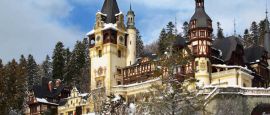
Located near Sinaia in the Carpathian foothills, Peleș Castle was built as a royal residence in the 19th century and is known for its Neo-Renaissance architecture, ornate wooden interiors, stained glass, towers and mountain setting. Surrounded by forests and alpine scenery, the castle reflects the grandeur of Romania's former royal family.
Sibiu
Sibiu is one of Romania's best-preserved historic cities and was once an important centre of the Transylvanian Saxons. Grand squares, pastel-coloured buildings and fortified walls give the city a distinctly Central European atmosphere. Sibiu also serves as a gateway to the nearby Carpathian Mountains.
Sighișoara
Sighișoara is a well-preserved inhabited medieval citadel and is protected as a UNESCO World Heritage Site. The colourful old town, clock tower and narrow cobbled streets create an atmospheric historic setting. Vlad the Impaler is also believed to have been born here.
Timișoara
Timișoara, near the Serbian and Hungarian borders, is known for its elegant Austro-Hungarian architecture, broad squares and multicultural history. Often called "Little Vienna", the city also played a central role in the 1989 Romanian Revolution.
Transfăgărășan Highway
The Transfăgărășan Highway crosses the southern Carpathians through dramatic mountain scenery of lakes, tunnels and steep slopes. Usually open only during the warmer months, the winding route has become one of Romania's best-known drives.
Do you have any Feedback about this page?
© 2026 Columbus Travel Media Ltd. All rights reserved. No part of this site may be reproduced without our written permission, click here for information on Columbus Content Solutions.



 You know where