

Croatia History, Language and Culture
History of Croatia
The lands of present-day Croatia were inhabited from prehistoric times and later became home to Illyrian and Celtic peoples. Rome gradually conquered the region, incorporating much of it into the provinces of Dalmatia and Pannonia. Roman influence was extensive, and important remains survive at Pula, Salona and Split, where Emperor Diocletian built his vast retirement palace around the turn of the 4th century AD.
Croats settled in the region during the early Middle Ages. An independent Croatian kingdom emerged in the 10th century, traditionally associated with King Tomislav, who is regarded as Croatia's first king. In 1102, Croatia entered a dynastic union with Hungary, beginning centuries of political association with the Hungarian crown.
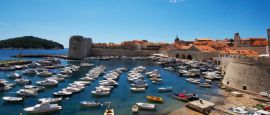
From the 15th century, the region became caught between expanding Ottoman power, the Habsburg monarchy and the Republic of Venice. Venice controlled much of the Dalmatian coast and islands, leaving a strong architectural and cultural legacy, while the Habsburgs ruled much of inland Croatia. Dubrovnik developed separately as the prosperous Republic of Ragusa, an important maritime trading state that maintained considerable independence until Napoleon abolished it in 1808.
Following the Napoleonic period, most Croatian lands eventually came under Habsburg rule. During the 19th century, a Croatian national movement sought greater political and cultural autonomy. After the collapse of Austria-Hungary in 1918, Croatia became part of the Kingdom of Serbs, Croats and Slovenes, renamed Yugoslavia in 1929.
During the Second World War, the Axis powers established the Independent State of Croatia, a fascist puppet state governed by the Ustaše regime. The regime persecuted and murdered large numbers of Serbs, Jews, Roma and political opponents. Resistance was led principally by the communist Partisans under Josip Broz Tito, who established socialist Yugoslavia after the war.
Croatia became one of six republics within socialist Yugoslavia. Following Tito's death in 1980, political and economic tensions increased across the federation. Croatia held its first multiparty elections in 1990 and declared independence from Yugoslavia in June 1991.
The declaration was followed by the Croatian War of Independence, fought between Croatian forces and rebel Croatian Serb forces supported by the Yugoslav People's Army. Fighting caused extensive destruction and displacement, particularly in areas including Vukovar and around Dubrovnik. Croatian forces regained most Serb-held territory in 1995, and the remaining UN-administered region of eastern Slavonia was peacefully reintegrated into Croatia in 1998.
Since independence, Croatia has increasingly integrated with European and transatlantic institutions. It joined NATO in 2009 and the European Union in 2013. On 1 January 2023, Croatia adopted the euro and joined the Schengen Area, removing routine border controls with other Schengen countries.
Did You Know?
• Dubrovnik was once the independent Republic of Ragusa, a maritime republic that survived for centuries by combining extensive trade with skilled diplomacy.
• The necktie is associated with Croatian soldiers serving in France during the 17th century; the French word cravate derives from a term for Croats.
• Diocletian's Palace in Split was built as a fortified imperial residence, but over the centuries its ancient structures became incorporated into a living city of homes, shops, streets and churches.
Language in Croatia
Croatian is the official language and is written using the Latin alphabet. It is a South Slavic language and is closely related to Serbian, Bosnian and Montenegrin.
Minority languages, including Serbian, Italian, Hungarian, Czech and Slovak, have official status in some municipalities and regions where the relevant communities are concentrated. Italian is particularly visible in parts of Istria, where Croatian and Italian are used officially.
English is widely spoken in tourist areas, hotels, restaurants and among younger Croatians. German and Italian are also commonly understood in parts of the tourism industry, particularly along the Adriatic coast.



 You know where